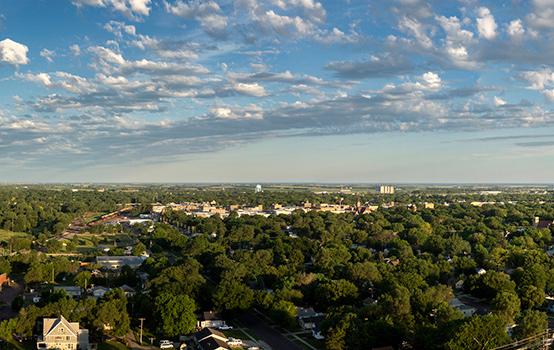
For many of us who study and write about school segregation, a bitter irony confronts us every day: The communities surrounding the colleges and universities where we work, and where many of us live, themselves tend to be quite segregated.
Search online for the “best college towns” in the country and you’ll see glossy images of places like Boulder, Colo. (0.9% Black, according to the 2010 U.S. census), Ithaca, N.Y. (6.7%), Ames, Iowa (3.4%), State College, Penn. (3.8%), and Corvallis, Ore. (1.1%). Meanwhile, the neighboring towns often look starkly different. For example, in East Lansing, Mich. — the home of Michigan State University — 6.8% of residents are Black, while the figure for the adjoining City of Lansing is 23.7%.
To some in academia, the demographic makeup of college towns is precisely what makes them attractive. For example, one researcher noted that “When smart people cluster together, innovation occurs, productivity rises, and growth occurs. This is undoubtedly a good thing. Thanks to educational segregation, the cities and college towns in which many of us live have become bright spots in the American economy” (Domina, 2007).
You’ve accessed your three free articles for this month.
If you are a PDK member, login to read more.
If you are not a PDK member, join for full access, in addition to other benefits. Complete our membership form to join.
Forgot your password? Visit the Member Portal to reset your password.
Having trouble? Contact our member services team at memberservices@pdkintl.org or 800-766-1156.