Even as students, standards, and technology move ahead, high schools stay stuck in an old paradigm. Time to move on!
Depending on when you came of age, chances are there is a movie that perfectly captured the high school experience of that time. “Bye Bye Birdie,” “American Graffiti,” “Fast Times at Ridgemont High,” and “High School Musical” are some of the seminal examples of how cinema has portrayed the high school experience. While some themes remain constant — boy meets girl and problems ensue, nerd gets stuffed into a locker, teachers are either nice or mean but always clueless — the world has clearly changed since Birdie came to town.
The irony is that most American high schools, despite the fact that the world has transformed itself over the last few decades, have not changed much. Indeed, the Common Core and the more rigorous academic standards recently adopted by most states are a clear affirmation that the world has changed, and American students need to up their game if they want to compete with their leading international counterparts. Higher standards and expectations, however, represent only one aspect of the high school experience, albeit a very important one. While we may have come to consensus on what rigorous academic standards should look like in the 21st century (consensus being 45 states and D.C.), a host of other factors also affect the high school experience. In these other aspects of high school life, many students are still living in the past.
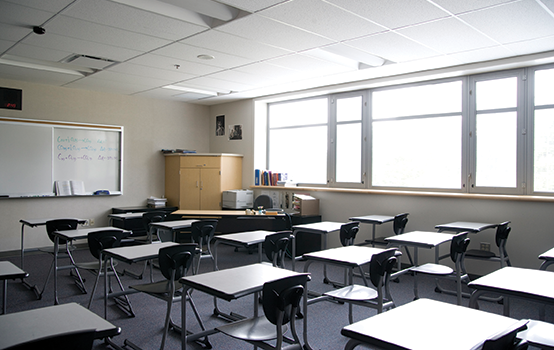
For a lot of practical reasons, many high schools (especially large urban ones) tend to operate with a command-and-control mindset. Teachers are in charge of their classrooms, principals are in charge of the teachers, students remain seated and static for much of the classroom time, and almost all learning is expected to take place in the classroom between roughly 7:30 a.m. and 2:30 p.m. Testing and accountability are paramount (for a range of reasons that will have to be the subject of another column), and the uptick in school violence has made lockdown drills (the 21st-century version of “duck and cover”) commonplace even in the safest, most elite school districts. Order and accountability are supreme, especially for schools in communities plagued with poverty and violence.
While much time and effort has been paid to high school completion, precious little has been paid to changing the way high schools operate to ensure that outcome.
It’s not hard to understand why most high schools operate this way. In many communities, high schools are large and busy and filled with young people just dying to push the corners of the envelope. Teachers and administrators are under enormous pressure to ensure safety and meet accountability requirements, so they often hold onto what they know “works” — even when it doesn’t. For school leaders, these are perilous times, so who can blame them for playing it safe for the good of the order? And, as anyone who has worked in policy circles in Washington knows all too well, high schools are the backwater of education reform, sandwiched between concern for literacy and early childhood and the concern over rising college costs. While much time and effort has been paid to high school completion, precious little has been paid to changing the way high schools operate to ensure that outcome. As the mother of a newly minted teenager, I submit that the American high school needs a makeover.
Try and remember when you were a teenager on the cusp of adulthood. Change is constant — physically and mentally — and while confidence is developing in some areas, insecurity and anxiety rule in other areas. The potential for students to drop out is never greater than during these years. Research tells us motivation declines as a student progresses from elementary through high school and that while a range of factors can affect a student’s ability to remain engaged and motivated, several dimensions are vitally important.
Relatedness is when a student completes a task because doing so rewards the student with a sense of belonging or approval from an important person or institution. In high school, a students’ relationships with teachers, coaches, and other important adults can profoundly affect their experience. It is counterintuitive that teenagers — so outrageous in their self-absorption — desperately need to feel connected to adults who care about them as individuals.
Unfortunately, growing class sizes, fewer guidance counselors, and a near obsession with test scores have made relationship building with students nearly impossible. The effect of this is never more damaging than on high school students seeking to become first-generation college-goers. Even if they master the academic requirements to get into college or to pursue a vocational apprenticeship, there is often no one in their lives who can advise them on how to apply to and pay for college or training. That feeling of confusion and isolation can overpower even the promising students, especially when no one is available to help.
The high school years are also a time to question and rebel against convention, so keeping students engaged in and excited about their work in class is crucially important. Research shows that a student’s level of motivation can rise or fall based on whether the work they’re doing has some practical application toward the kind of life they want after high school. The notion that students deeply engage in work that is project-based, collaborative, and directed toward a real-life situation or problem is not new. Organizations like The Buck Institute and Expeditionary Learning Schools have promoted and practiced project-based learning for decades. As vice president for policy for the Alliance for Excellent Education, a Washington-based nonprofit that focuses on the unique needs of high schools, I was able to observe high-quality, project-based learning in action in a range of schools. When managed by skilled teachers and incorporated into the culture of the school, project-based learning pulls students into the learning process like some gravitational force. If a lack of relevance is a major reason why students drop out of high school, then shouldn’t more high schools be thinking about how they can develop project-based work for students?
And then there is technology, omnipresent in all aspects of everyone’s life, yet relegated to the sidelines in most American high schools. The current generation of students — and even some teachers — has come of age in an era where information and speed triumph over everything, and most want the same dominion they have over their cell phones in all aspects of their life. Before and after school, they proactively control and manipulate the multiple forms of information and interaction they can access on their phones and computers. But once they get to school, their environment suddenly regresses 20 years as their access to technology is severely restricted. In fairness, the last decade has seen a tremendous amount of change regarding how digital technologies can enhance and even transform the teaching and learning process. However, while a minority of schools and districts has allowed students and teachers to use their devices with impunity, most public high schools still limit what students can and can’t do with their devices. This contrast between how students engage and interact in the world outside vs. what they’re allowed to do in high school is just too enormous to rationalize. No matter how uncomfortable older generations are with technology, there has to be some kind of middle ground if we want high school students to remain connected (in the more traditional sense) to what they’re learning.
Teenagers — so outrageous in their self-absorption — desperately need to feel connected to adults who care about them as individuals.
While high standards and better assessments may be the most important indication for the adults in the building that a high school has adapted to changing times, only students can decide whether high school is a place they want to be. Policy innovations like “competency-based education,” where measures of student learning are based on the mastery of skills and competencies rather than on time spent sitting in a classroom, are helping schools create more personalized student-centered learning environments, a change that is most welcome to most high school students. An increased emphasis on “deeper learning” competencies like collaboration, communication, and self-direction have also spurred policy discussions about how high school students engage in and present their work.
The world in which teenagers live when they are not in school has changed profoundly, more so than at any time in recent history. If high school is the home stretch in preparing them for life in the “real world,” then we need to take a hard look at the policies and practices that currently define most American high schools.
CITATION: Ferguson, M. (2014). WASHINGTON VIEW: Time for high schools to grow up. Phi Delta Kappan, 95 (5), 68-69.
ABOUT THE AUTHOR

Maria Ferguson
Maria Ferguson is an education policy researcher, thought leader, and consultant based in Washington, DC.